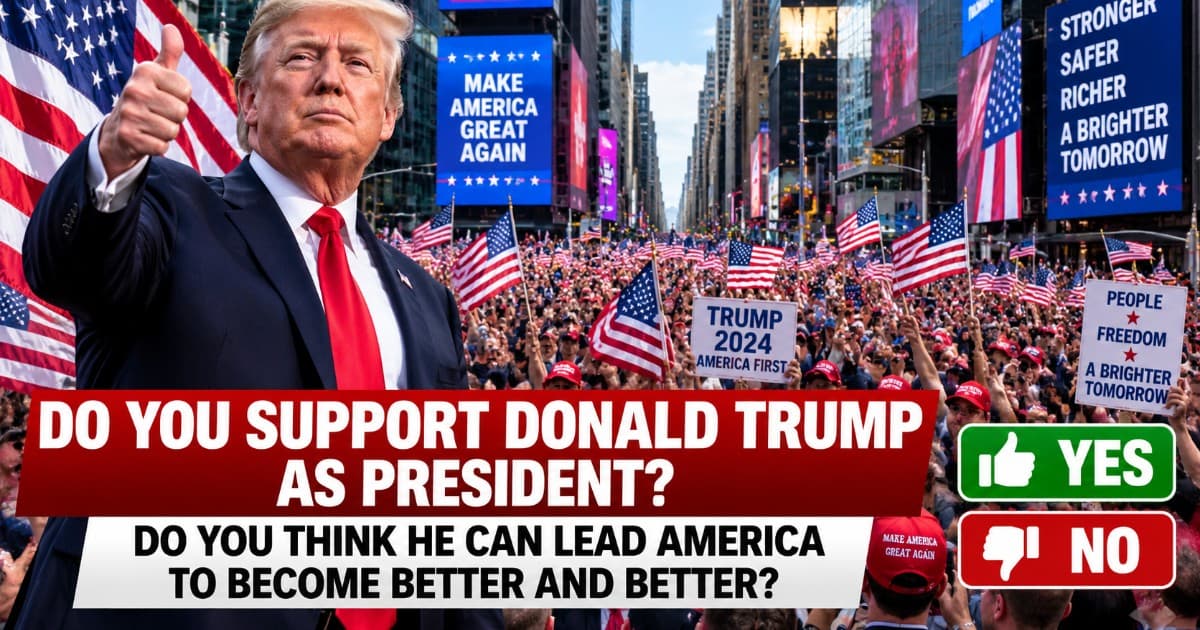
A prominent social media post featuring a massive flag-waving assembly has triggered widespread online engagement across the United States. The digital broadcast challenges citizens to express whether they back Donald Trump and believe his administration can secure a prosperous future for the nation.
While the promotional material has garnered substantial digital traction and enthusiastic commentary from loyalists, media analysts emphasize that these internet metrics fail to represent a scientifically validated metric of national public sentiment.
Donald Institute figures and political observers note that Trump continues to command significant influence across the American political landscape. His adherents regularly highlight his past legislative and executive stances regarding commerce, border enforcement, and international affairs as primary drivers for their enduring allegiance.
Conversely, fierce detractors roundly reject his policy frameworks and leadership approach, illustrating the persistent ideological fractures dividing the country. This digital phenomenon mirrors broader historical trends where decentralized internet campaigns frequently amplify partisan divisions between rival electoral factions.
Independent fact-checking organizations have simultaneously monitored the digital ecosystem surrounding the former president, identifying a concurrent rise in fabricated claims circulating online. Outlets like Factly recently moved to debunk completely fabricated digital rumors alleging unusual foreign electoral equipment imports.
Beyond domestic digital discourse, Trump's public pronouncements continue to reverberate internationally. Recent diplomatic friction involving Iranian officials and public health inquiries concerning potential viral outbreaks demonstrate how his statements consistently command global headlines.
As the nation steadily approaches the crucial 2026 midterm congressional elections, the viral nature of these partisan posts underscores an intensifying political atmosphere. Observers expect digital mobilization efforts from both sides of the aisle to accelerate significantly in the coming months.
Stakeholders and policy experts anticipate that online platforms will remain primary battlegrounds for voter engagement. Consequently, maintaining rigorous journalistic verification will be essential for navigating the complex web of digital rhetoric leading up to the national ballot.