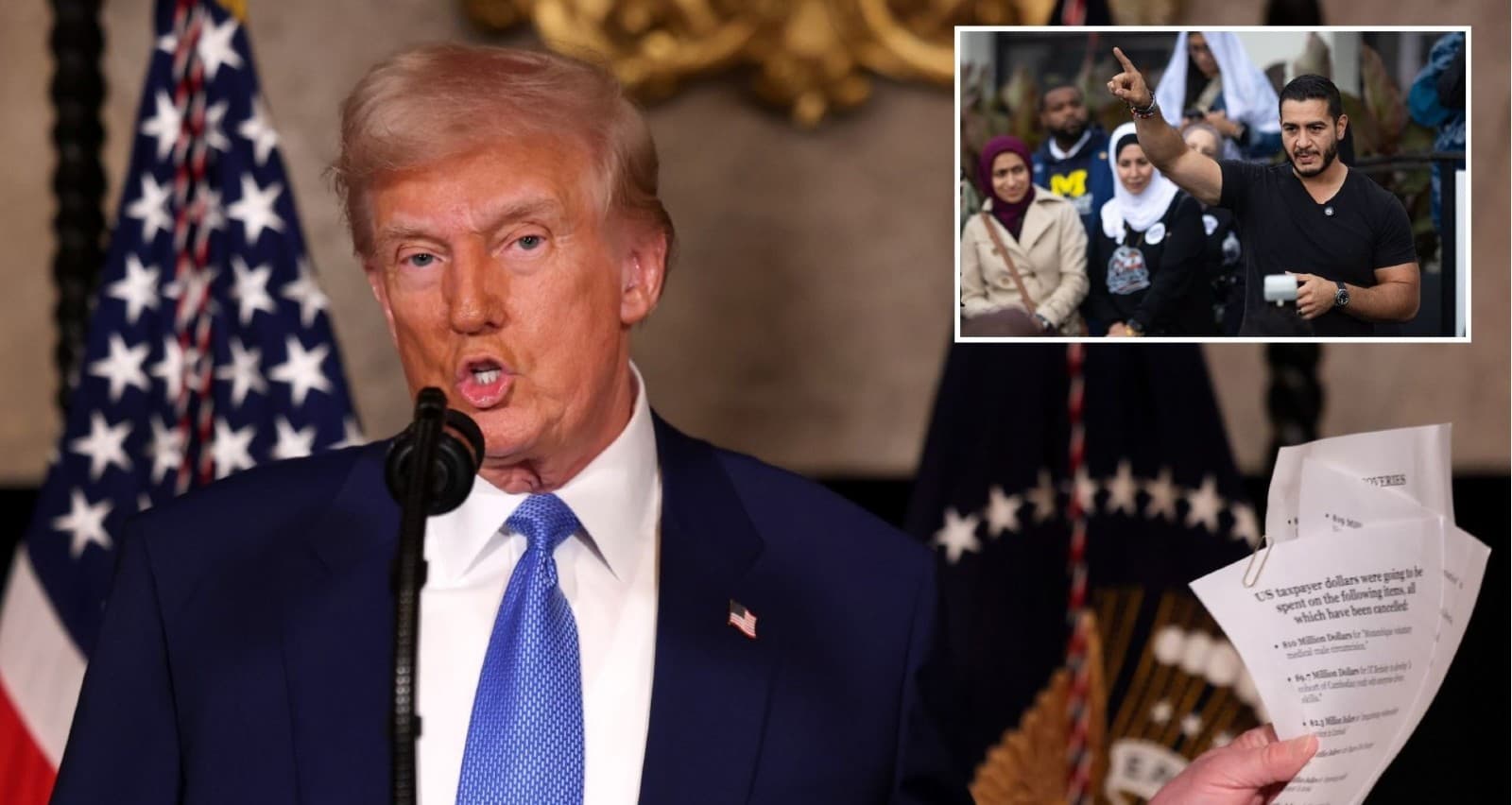
Former President Donald Trump recently declared his strong opposition to Islamic legal systems, vowing to support federal measures to prohibit Sharia law from being implemented in the United States. During a radio interview with conservative host Glenn Beck, Trump advocated for a singular constitutional framework, referencing European cities as cautionary examples against the adoption of diverse legal systems.
These pronounced remarks quickly ignited fierce partisan reactions, intensifying existing political debates concerning religious legal systems, constitutional supremacy, and national security policies. This declaration establishes a contentious tone for upcoming elections, further polarizing discussions on fundamental American governance principles and their interpretation.
Trump's latest pledge is consistent with a discernible pattern of rhetoric concerning Islam and Muslim communities throughout his extensive political career. The Washington Post has meticulously chronicled a timeline of his prior critical comments, highlighting a long-held perspective frequently perceived as anti-Islamic by various advocacy groups and commentators.
Furthermore, this proposed ban echoes earlier controversial policies from his presidency, such as the stringent refugee and immigration restrictions, which ABC News noted were reminiscent of historical exclusionary laws. These past actions reinforce a consistent approach to perceived threats against national identity and legal frameworks.
While numerous legal experts consistently affirm the U.S. Constitution's established primacy over any religious codes, conservative lawmakers continue to advocate for explicit, additional safeguards against competing legal authorities. This persistent legislative push underscores a perceived need for clearer statutory language to counter potential challenges from religious legal codes.
Charisma Magazine Online confirmed Trump's explicit commitment to prohibiting Sharia law, amplifying his message across conservative media platforms and reaching a significant segment of his political base. This widespread dissemination ensures the policy remains a prominent point of discussion among his supporters and critics alike.
Nationally, Trump’s declaration is poised to profoundly influence the domestic political landscape, especially in the crucial run-up to the next presidential election. It brings to the forefront complex discussions about religious freedom, individual civil liberties, and the foundational principles of American governance.
This issue will remain central to public discourse, forcing a national conversation about the balance between religious expression and secular law. The debate will undoubtedly shape voter perceptions and candidate platforms, affecting outcomes in key states and potentially redefining aspects of the federal legal framework.